
Is Tetrahexyldecyl Ascorbate Better Than Ascorbic Acid?
Getting to Know the Two "Contenders"
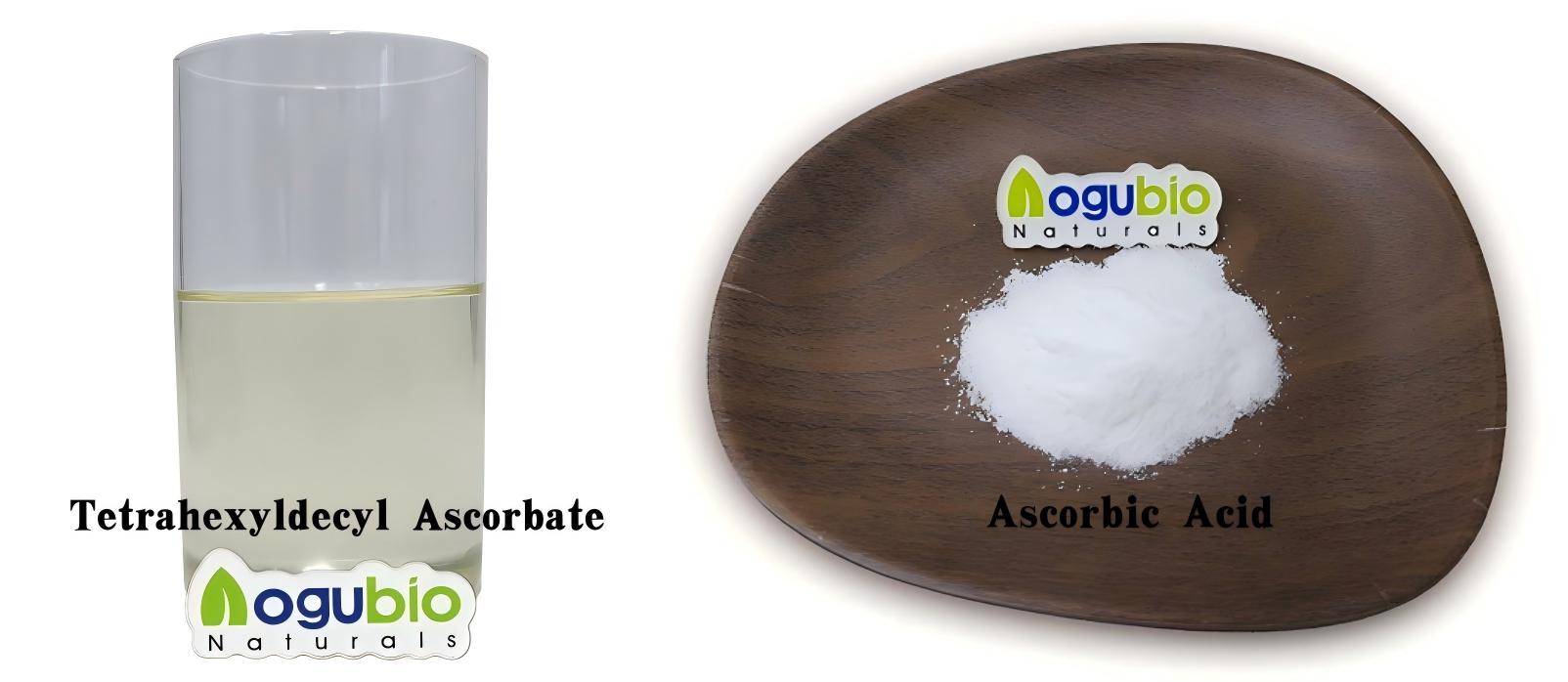
Ascorbic Acid is the purest form of vitamin C and a water - soluble antioxidant. For a long time, it has been highly praised for its ability to Brighten Skin tone, reduce dark spots, and promote collagen production. However, its effectiveness is limited to a certain extent by its own instability. Ascorbic Acid is highly reactive and easily oxidizes when exposed to air, light, or heat, thereby losing its activity.
In contrast, Tetrahexyldecyl Ascorbate is an oil - soluble derivative of vitamin C. It was developed to overcome some of the problems faced by Ascorbic Acid. This form of vitamin C has higher stability and is not prone to oxidation, making it a reliable ingredient choice in skincare formulations.
| Comparison Dimension | Tetrahexyldecyl Ascorbate (THD-AA) | Ascorbic Acid (AA) |
|---|---|---|
| Chemical Structure & Solubility | Lipophilic vitamin C derivative (esterified form of ascorbic acid) with a large molecular weight; easily soluble in oil-based ingredients | Water-soluble native form of vitamin C with a small molecular weight; soluble in water but insoluble in oils |
| Skin Penetration | Excellent. Its lipophilic structure allows direct penetration of the skin’s stratum corneum (primarily composed of lipids) without relying on carriers, ensuring high penetration efficiency | Poor. Its hydrophilic structure struggles to cross the lipid barrier of the stratum corneum; most remains on the skin surface, with only a small amount absorbed via active transport or skin gaps |
| Stability | Extremely high. The esterified structure prevents direct reactions with oxygen, light, temperature, and pH fluctuations, resisting oxidation and inactivation. Products containing it have a long shelf life (typically 1–2 years) | Extremely low. Prone to oxidation (turns dark when oxidized), decomposition (from light), inactivation (from high temperatures), and instability (stable only in acidic environments; decomposes easily in neutral/alkaline conditions). Products require stabilizers and have a shorter shelf life (typically 6–12 months) |
| Irritation | Extremely low. Its mild molecular structure does not directly release free hydrogen ions, making it suitable for sensitive skin and skin with impaired barriers (e.g., post-chemical peel, post-sunburn); almost no stinging sensation | Relatively high. The native form is acidic (pH ~2.5–3.5), which may irritate the stratum corneum when applied directly, causing stinging, redness, or peeling. Caution is advised for sensitive skin |
| Mechanism of Action | After penetrating the skin, it is slowly hydrolyzed into free ascorbic acid by esterases, releasing active ingredients continuously for a long duration (usually 4–6 hours) | Acts directly as free ascorbic acid, releasing activity rapidly but with a short duration (approximately 1–2 hours); easily consumed quickly |
| Suitable Product Formulations | Ideal for oil-based products, such as facial oils, creams, cream masks, and liquid foundations (improves skin feel and prevents pilling) | Ideal for water-based products, such as toners, serums, and aqueous masks (easily soluble and compatible with water-based ingredients) |
| Key Efficacy Strength (at the same concentration) | 1. Brightening & Spot Reduction: Deep penetration and sustained active release ensure stable inhibition of melanin production 2. Antioxidation & Anti-Aging: Penetrates the dermis to protect collagen, with higher free radical scavenging efficiency than AA 3. Repair: Mildness supports long-term use, aiding skin barrier repair | 1. Brightening & Spot Reduction: Works quickly on the skin surface but has insufficient penetration; efficacy is easily affected by stability 2. Antioxidation & Anti-Aging: Acts mainly on the skin surface; strong free radical scavenging ability but prone to inactivation 3. Repair: Irritation limits long-term use; not recommended for skin with impaired barriers |
| Usage Precautions | - No strict need for light protection (inherently stable), but nighttime use is recommended to minimize daytime external interference - No need for penetration enhancers (lipophilic nature enables easy absorption) | - Strict light protection is mandatory (oxidation produces irritants); nighttime use is recommended, and high-SPF sunscreen is required during daytime if used - Can be paired with niacinamide or ceramides to reduce irritation, or with penetration enhancers (e.g., propylene glycol) to improve absorption |
| Market Application Scenarios | Targets anti-aging and brightening products labeled “mild yet effective” or “suitable for sensitive skin,” such as high-end facial oils and repairing creams | Targets potent brightening products labeled “high-concentration native VC” or “fast brightening,” such as professional brightening serums and post-chemical peel rescue serums (low concentrations required) |
Advantages of Tetrahexyldecyl Ascorbate
- Greater Stability
High stability is one of the most significant advantages of Tetrahexyldecyl Ascorbate. A study published in the journal Antioxidants pointed out that when Tetrahexyldecyl Ascorbate is combined with Acetyl Zingerone, it can effectively resist singlet oxygen and prevent its own degradation. Experiments showed that without Acetyl Zingerone, Tetrahexyldecyl Ascorbate completely degraded within 6 minutes; while in the presence of Acetyl Zingerone, only 25% of it degraded after 10 minutes. This fully proves that Tetrahexyldecyl Ascorbate can maintain good stability in an appropriate formula, ensuring that the efficacy of the ingredient is stably exerted during product storage and use, and bringing stable and long - lasting skincare effects to users.
- Better Penetration
The oil - soluble nature of Tetrahexyldecyl Ascorbate allows it to penetrate deeper into the skin. The outer layer of the skin (the stratum corneum) is mainly composed of lipids. As an oil - soluble molecule, Tetrahexyldecyl Ascorbate can more easily pass through this lipid barrier. A study conducted by a well - known skin research institution in the United States showed that through skin penetration experiments, Tetrahexyldecyl Ascorbate can effectively reach the deep layers of the epidermis. This study used advanced skin models and detection technologies to track the distribution of Tetrahexyldecyl Ascorbate in various layers of the skin. The results showed that it can have a more significant effect on collagen synthesis and cell repair in the deep epidermis. In contrast, Ascorbic Acid, due to its water - soluble property, is difficult to penetrate the lipid - rich skin barrier and thus cannot reach the same penetration depth.
- Excellent Antioxidant and Anti - Aging Effects
Tetrahexyldecyl Ascorbate has strong antioxidant properties and can neutralize free radicals. Free radicals are unstable molecules that can damage skin cells and accelerate skin aging. By scavenging these free radicals, Tetrahexyldecyl Ascorbate can help the skin resist the damage of external environmental stressors such as ultraviolet rays and pollution. A study published in the Journal of Cosmetic Dermatology pointed out that the topical application of products containing Tetrahexyldecyl Ascorbate can significantly promote the synthesis of collagen in human skin cells. This study selected a certain number of volunteers to conduct a product use test for several months. Using professional skin detection instruments to observe the changes in collagen content in the skin, the results showed that the volunteers who used the products containing Tetrahexyldecyl Ascorbate had a significant increase in skin collagen content. The increase in collagen content helps to improve skin elasticity, reduce fine lines and wrinkles, and make the skin appear younger.
- Outstanding Skin - Lightening and Spot - Reducing Effects
The effect of Tetrahexyldecyl Ascorbate in improving hyperpigmentation has been confirmed. It works by inhibiting the production of melanin, the pigment that determines skin color. Japanese scholar Yasunobu Ochiai and others evaluated the effect of Tetrahexyldecyl Ascorbate (VC - IP) on ultraviolet (UV) - induced skin pigmentation in a related study. The study found that after topical application, it can significantly inhibit the increase of intracellular peroxides after UVB irradiation and enhance the cell's tolerance to reactive oxygen species. Through cell experiments and clinical tests, this study further showed that Tetrahexyldecyl Ascorbate can reduce the production of interleukin IL - 1a and prostaglandin PGE in keratinocytes irradiated by UVB and inhibit the proliferation of melanocytes in the culture medium. In the clinical study, after topical application of 3% VC - IP cream for 3 weeks, the results evaluated by visual scoring showed that it can inhibit pigmentation after UVB irradiation and help the skin achieve a more even skin tone. This characteristic makes it a popular ingredient in skin - lightening and spot - reducing skincare products.
Applications in the Cosmetics Field
Tetrahexyldecyl Ascorbate has been widely used in various cosmetics:
- Anti - aging creams: With its ability to promote collagen production and resist free radical damage, it has become a core ingredient in anti - aging creams. Such creams usually claim to reduce wrinkles and improve skin firmness.
- Skin - lightening serums: Skin - lightening serums also often add this ingredient. Its melanin - inhibiting property helps to reduce dark spots and hyperpigmentation, making the skin glow with a brighter and more translucent luster.
- Sunscreen products: Even in sunscreen formulations, Tetrahexyldecyl Ascorbate can play a positive role. It not only provides antioxidant protection but also reduces the damage to the skin caused by ultraviolet rays, thereby enhancing the overall protective effect of the sunscreen.
Conclusion
Although Ascorbic Acid has its own advantages, the multiple advantages of Tetrahexyldecyl Ascorbate make it an attractive choice in the skincare field. Its greater stability, better penetration, and excellent antioxidant, anti - aging, skin - lightening, and spot - reducing effects make it popular among formulators and consumers. However, the final choice of which ingredient to use still depends on personal skin needs and preferences. For example, some people with extremely sensitive skin may prefer the relatively mild nature of Ascorbic Acid; while for those who pursue a vitamin C ingredient with stronger stability and deeper penetration, Tetrahexyldecyl Ascorbate will be a more suitable choice. With the continuous development of the skincare industry, future research may discover more benefits and application scenarios for these two powerful ingredients.
- Name: Yuik
- E-mail: sales02@nahanutri.com
- WhatsApp:+8618066950297